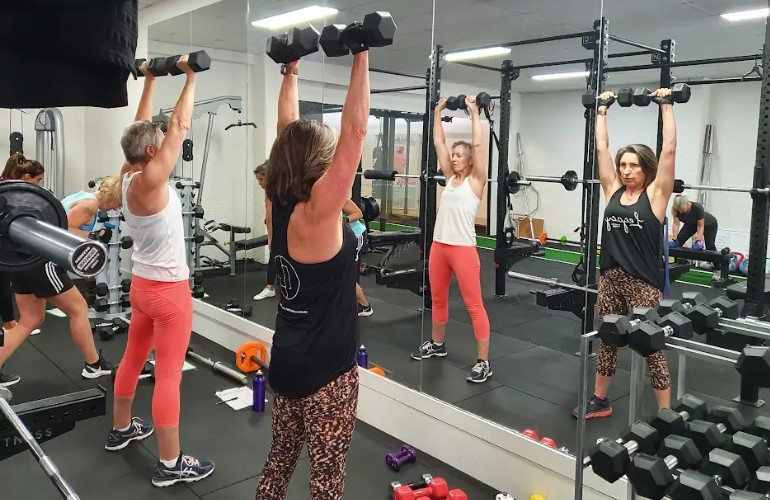
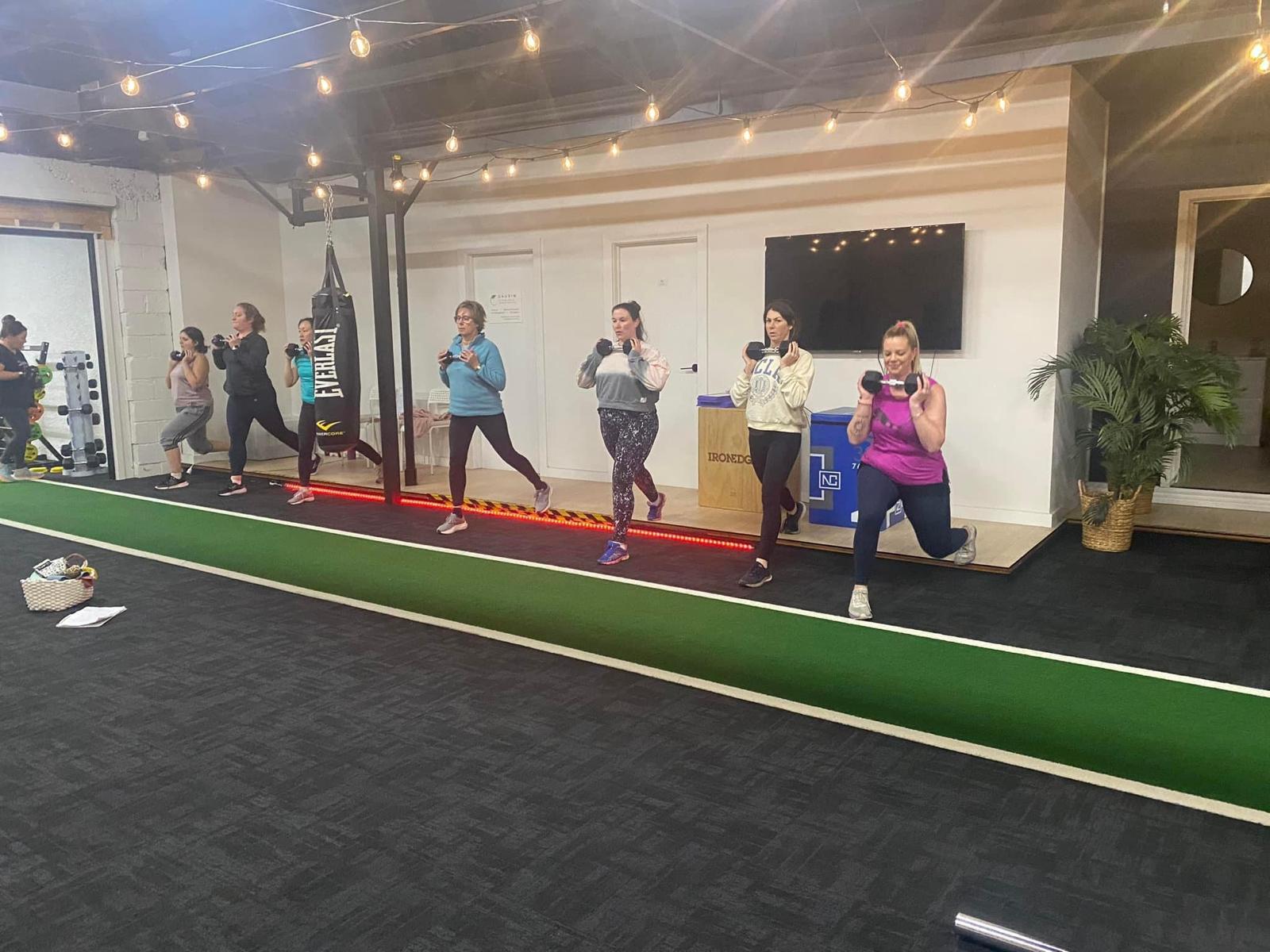
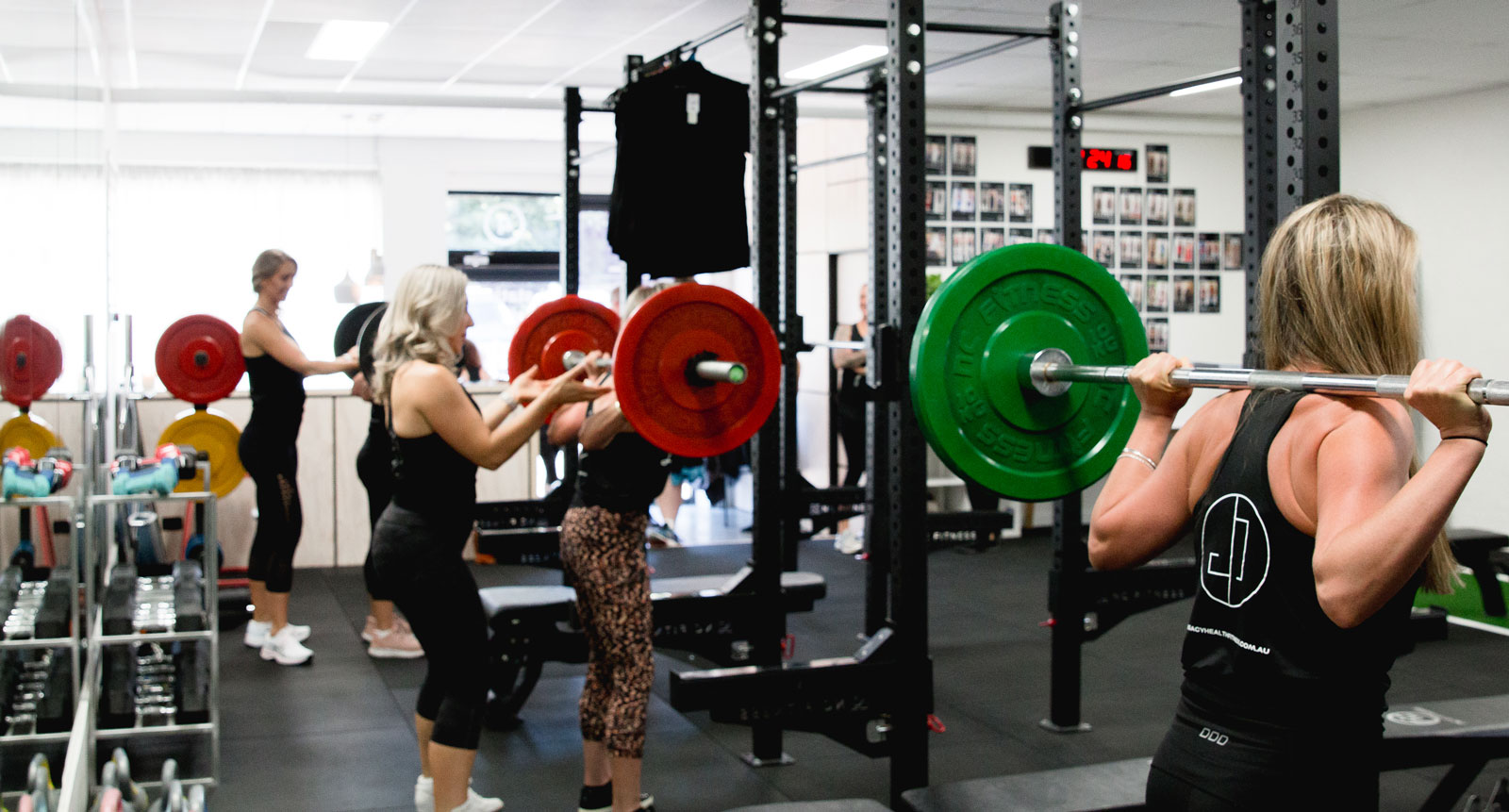
Our gym is indoors, so our clients don’t have to worry about it being dark outside or the temperatures affecting their workouts, but we have been asked some great winter-related questions in the past, so we thought we’d answer a few of our favourites. We asked our experienced coaches some questions about training in winter.
Let’s dive in…
Is It Good For You To LifT Weights in the Cold?
The most practical way the cold can affect your workout is if you haven’t dressed appropriately. You still need to train safely, and if you’re wearing shorts and a vest and it’s 5 degrees out, then your body will be less efficient. When you’re very cold, your body moves your blood away from your extremities towards your core to protect your organs. This can make your muscles and joints stiffer.
So, warm-ups and dressing appropriately can significantly impact the performance of your workout and keep you safe.
Do You Burn More Fat in the Cold?
Not really. If you do, it’s a tiny amount. Your body must work harder to regulate your body temperature, but that’s it.
And, if you’re not working hard because you’re too cold (like the last question), you’re negating any potential benefit anyway. Fat loss and muscle building are more effective with consistency and hard work.
Is It Good To Exercise In Winter?
Yes! And this is where we want to delve into some detail because working out in winter is an essential part of your schedule.
The nights are longer, the days shorter. You leave your house, and you can see your breath, and some days, getting up and going can feel like a bit more of a slog. We understand that, and we are not immune from winter sluggishness either. But maintaining that motivation and pushing through the winter is essential to progressing towards your goals faster. Our bodies need movement all year round!
Can I take a Break from Exercise in Winter?
Technically, yes. But we strongly advise against it. If you have goals for your health, physique, and abilities by the summer, then the winter period is part of that process.
Don’t Forget the short-term benefits of exercise
After just 1 workout, we tend to see improvements in sleep quality and a reduction in anxiety and depression.
So, even just one gym class, one run, one cardio activity, one weight training session, can help boost your mood and potentially improve your mental health. Meaning, exercise can assist in pulling us out of the winter doldrums.
But it’s Dark in the Mornings, I Don’t want to Exercise in the Dark
We hear you–that sounds bleak. The best option, if you can’t exercise later in the day due to work or family commitments, is to find an indoor gym that offers training sessions to suit your schedule.
At our womens gym in Ringwood, we run classes at a variety of times, including some starting at 5:30 am, as well as 5.30 pm and 6.30 pm evening options to work around our busy clients. Saturday classes are also available. You can checkout our timetable here.
What Happens if I Don’t Exercise in Winter?
It’s not a pleasant list, but here’s what can happen:
A downturn in the progress you’ve made or inhibiting growth. Your cardiovascular fitness and muscle strength will decrease, your endurance will decline, and exhaustion and fatigue during periods of future exercise will increase. Basically, everything will get harder again, and you’ll get slower.
Weight gain. Dum dum duuuuuum. We tend to eat more comfort food in winter–who says no to a big roast dinner? Plus, without the regular stimulus of exercise, your muscles will begin to atrophy, reducing your metabolic capacity and making storing excess energy as body fat easier. By continuing to challenge your muscles with resistance exercises, you can offset this muscle atrophy and keep your body feeling strong and energetic in the lead-up to spring.
Without the regular stimulus of exercise, your muscles will begin to atrophy, reducing your metabolic capacity and making storing excess energy as body fat easier. By continuing to challenge your muscles with resistance exercises, you can offset this muscle atrophy and keep your body feeling strong and energetic in the lead-up to spring.
Stiffness and discomfort can increase. Regular exercise helps keep joints limber; without it, you might notice an increase in stiff joints and achiness, particularly in cold months.
A weaker immune system – because regular exercise boosts your immunity by enhancing circulation, promoting better sleep, and supporting the immune system’s ability to detect and fight infections.
Decline in mental health. Stopping exercise can negatively impact mental health by increasing stress levels, reducing mood-boosting endorphins, and potentially leading to feelings of anxiety and depression.
How We Adapt Our Programs For Winter
We encourage our members to push through the winter. Many of our clients have goals, including weight loss and feeling confident in the summer months. Any breaks or setbacks during the winter will impact summer-related goals. So, there’s no slowing down just because it’s cold and dark.
For our 12-week Body Transformation challenge, our participants follow a nutrition and exercise program to achieve their desired goals. To provide extra motivation and accountability during the colder months, we extend the program to 24 weeks, giving our members a project to focus on. This helps ensure they stay committed, get out of bed, make nourishing meals and make it to the gym, so they can step into the warmer months feeling vibrant and ready to rock! You can learn more about our 12 or 24 week Challenge here:
Our Top Ten Tips for Making Working Out Easier in Winter
Non-negotiable: schedule your workouts into your diary every sunday and keep your appointments with yourself like you would your hairdresser!
Habit stack: pair your exercise routine with a habit you already do, like scheduling your gym class right after school drop off or your morning coffee.
Make it fun: Join a community-based facility where you can have a laugh while you exercise.
Power of a playlist: create a playlist of motivational speeches or songs that get you fired up
Coffee on the go: swap out your coffee shop catch-ups for walk-and-talk sessions
Wear Proper Gear: Invest in warm, moisture-wicking clothing to stay warm and comfortable.
Train Indoors: Utilise indoor facilities like gyms or home workout spaces to avoid the cold.
Set a Reward System: Treat yourself to small rewards for meeting your exercise goals.
Mix It Up: Try different types of exercises to keep things interesting and avoid monotony.
Set Specific Goals: Define clear, achievable goals to stay motivated and track your progress. Consider joining a 12-week challenge to keep you inspired and accountable.
If you need some help staying motivated and on track with your winter workouts, our experienced trainers can help. Get in touch to discuss a program that might work for you. And book your 7-day FREE trial here.
In our gym, we see women with confidence levels across the spectrum. Some start, raring to go: MyFitnessPal-ready, gimme the recipes, let’s transform this body. Great. Those clients can be great fun, and we see results quickly.
But that doesn’t mean we don’t appreciate our clients down the other end of the spectrum: those who are a little unsure or intimidated. We love you all and are here to help, whatever your confidence level.
We specialise in women’s fitness and deeply understand the mental and physical hurdles that might prevent you from getting back or getting in the gym. And we’re here to guide you through.
Here are our 5 top tips for women (like you) to start their fitness journey and overcome some of that initial gym intimidation.
These tips are from our excellent PTs and they know their stuff. Let’s dive in.
1. Acknowledge and accept your self-doubt
We aren’t here to fire platitudes at you:
“Our doubts are traitors…”
Granted, Shakespeare had a way with words, and he’s not wrong. But that doesn’t mean we should belittle or downplay the very real anxieties that you’re facing. We all get nervous, and many of us feel intimidated when trying something new. You’re pushing your boundaries, and feeling apprehensive is perfectly acceptable.
At Legacy, we acknowledge that and are here to talk you through it.
Whilst initial intimidation and trepidation to walk into a new gym and change your life is a big step, it’s not insurmountable. And certainly not one that you have to do alone. We will work closely with you to personalise your programming and ensure we set you up for success.
2. Reframe Negative Self-talk
Overheard in our gym: “Oh, I can’t do that.” “I’ll never be able to lift that. I’m so weak.” “Look at that other member. I will never be as fit as that.”
Negative self-talk like this will only slow you down. We might allow you a little wobble if we’re feeling generous, but everyone starts somewhere. And, right now–where you are–there’s no better time to start.
Those doubts you’re listening to are intrusive thoughts doing their best to pull you down. What we recommend is embracing your uniqueness–your own journey. Do things your way and enjoy the adventure. Our PTs will help you build a custom journey to suit you. We won’t push you too hard, or too quickly, so your body can adjust and you can enjoy exercising again.
Acknowledge those intrusive thoughts for what they are–intrusive. Tell them to f**k off.
You got this.
3. Set Small Achievable Goals
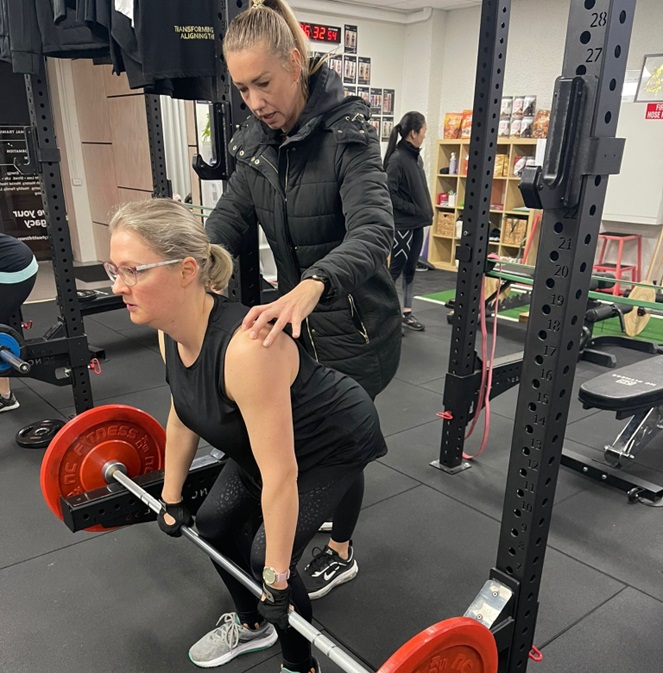
Starting at a gym (especially if you’re new) can be overwhelming. We understand that. Our PTs will always welcome new members, walk them through the gym, and run through each exercise, offering advice and support to ensure they can take it in. Not all gyms come with a PT, so that might be a little trickier, but the overall advice remains the same: set yourself small, achievable goals.
It’s the small victories that pave the path to lasting success.
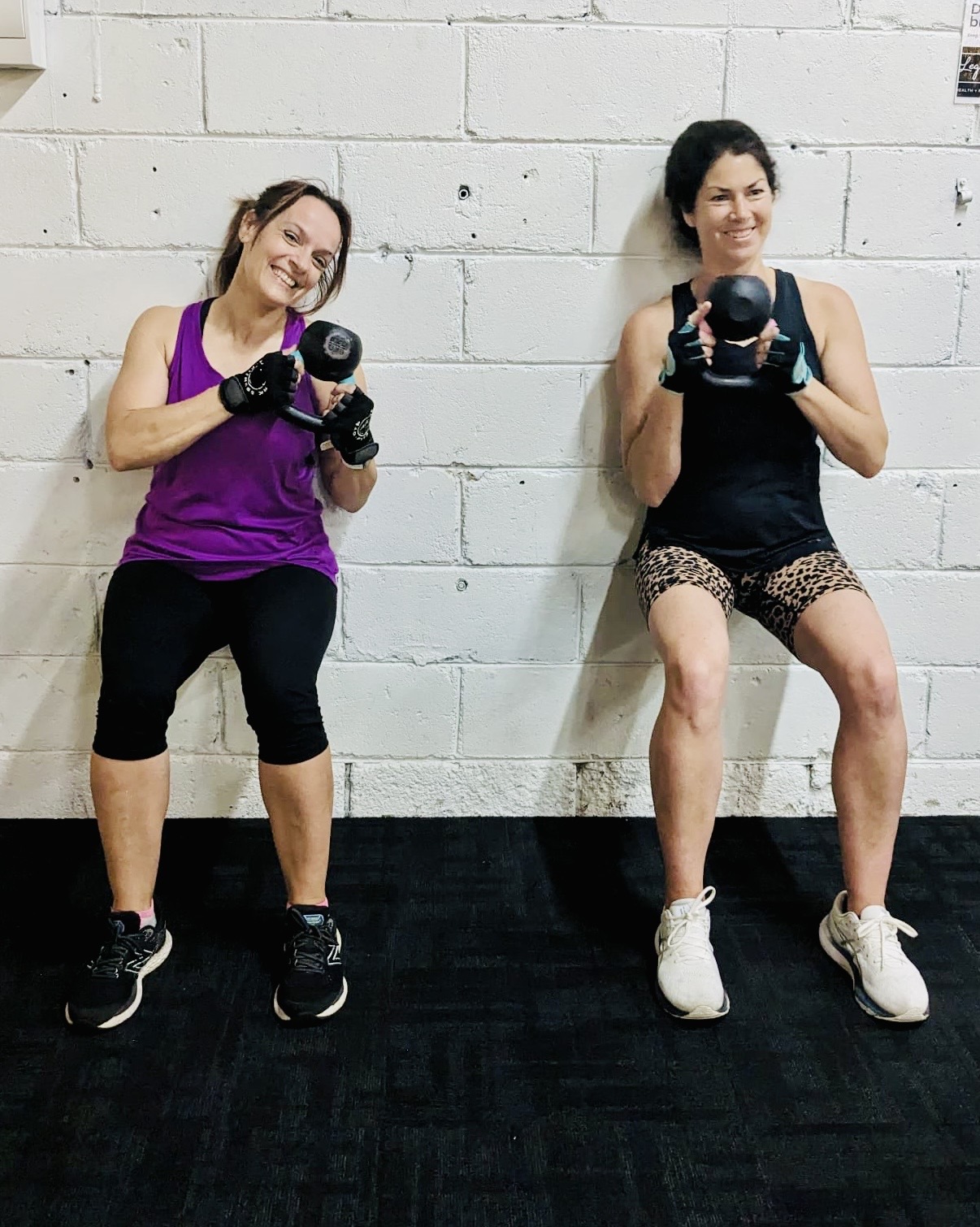
Our wall sit exercise from our lift class is a great example and one that gets our members talking. Plenty of our members have started from as little as twenty seconds, and at the moment, the PB is 9 minutes! Keeping track every week let’s each member see and acknowledge their individual progress. It keeps them motivated and excited for each week to see how they’ve done.
By breaking down your aspirations into manageable milestones, you not only boost your confidence but also cultivate a mindset of consistency and resilience. Remember, Rome wasn’t built in a day, and every small step forward is a victory worth celebrating on your journey towards a healthier, happier you.
4. Surround yourself with a positive community
“We are not put on this earth for ourselves, but are placed here for each other…”
This quote is 👌
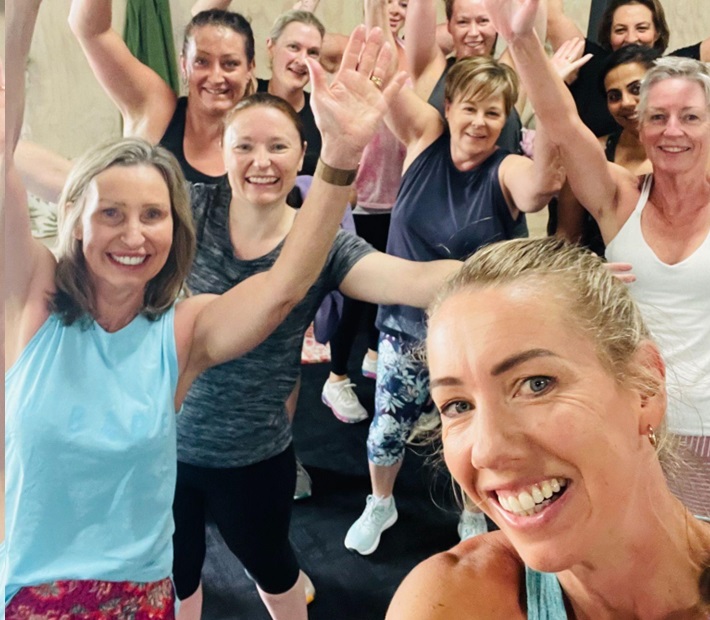
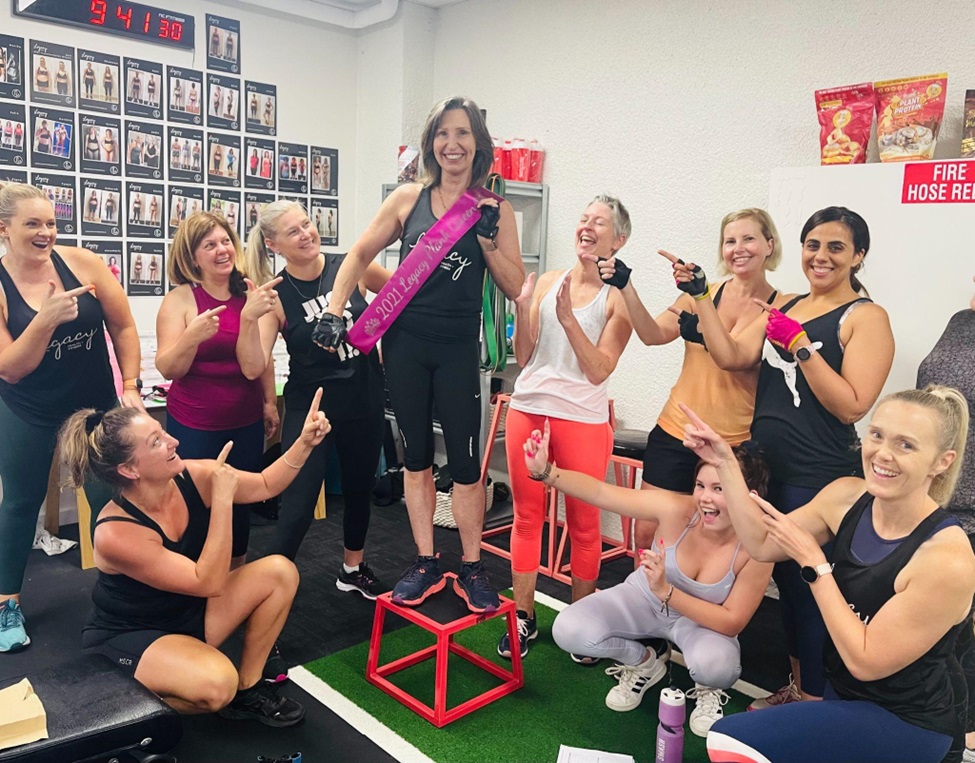
None of our members are on their own. Not only are our PTs there with them on their fitness journey, but our other members are part of it too! We support and raise each other up, as that benefits us all and keeps those nay-saying intrusive thoughts down. Plus, it’s much more fun. Find yourself a gym with supportive members. And, if you can’t join a gym, or aren’t quite there yet, surround yourself with supportive family and friends who can celebrate your milestones along the way.
5. Don’t be afraid to ask for help
If you’ve followed our other tips, you should find yourself in a comforting gym with supportive PTs, aiming to hit small, achievable goals and ignoring self-doubt and negative self-talk.
You are nailing it, but sometimes things go wrong, and you still need some help.
This is never more prevalent for our members than when we’re running a Body Transformation program. A couple of months in often see participants hit a plateau, and this can lead to a lack of motivation if it’s not addressed. We encourage our participants (and our gym members) to ask for help.
Our PTs specialise in training women, alongside expertise in nutrition coaching and support. Ask, and we can help.
You’re not in this alone.
If you’re interested in starting your fitness journey our PTs are ready to help. We are a women-owned gym based in Ringwood, Victoria and we live to help our members feel great about their fitness journey, whatever that looks like. Get in touch to see what might work for you.
In our gym, we see women with confidence levels across the spectrum. Some start, raring to go: MyFitnessPal-ready, gimme the recipes, let’s transform this body 508. Great. Those clients can be great fun, and we see results quickly.
But that doesn’t mean we don’t appreciate our clients down the other end of the spectrum: those who are a little unsure or intimidated. We love you all and are here to help, whatever your confidence level.
We specialise in women’s fitness 508 and deeply understand the mental and physical hurdles that might prevent you from getting back or getting in the gym. And we’re here to guide you through.
Do you need more sleep in your life, or could sleep be the ‘X’ factor in getting healthier and in shape for you?
In our busy, fast paced, driven world and in the race to get ahead, it’s very common to skimp on sleep in order to pack more into our days.
We know that we should address our sleep, but despite our good intentions to take better care of ourselves in this department, somehow life keeps getting in the way.
The flow on effect of getting less than the required hours of sleep can take an acute or even chronic effect on our health.
One night of missed sleep will impact your body’s ability to regulate glucose which can lead insulin resistance and if you are trying to shed fat, derail your efforts.
If you’re looking to be your healthiest, best version of you, then sleep may just be the X factor in getting into good shape. It’s in your deepest sleep cycles that your body has its greatest ability to repair, recover and grow.
Acute Effects
Tired/Lethargic
Bags under the eyes
Weight gain
Loss of dexterity
Insulin insensitivity (blood sugar levels can rise and diabetes can develop)
Leptin insensitivity (which can lead to uncontrollable food cravings – especially for junk foods)
Increased Ghrelin secretion (the higher your Ghrelin levels, the hungrier you will be)
Chronic Effects
High blood pressure
Obesity
Obstructive Sleep Apnoea
Cardiovascular disease
Psychiatric disorders & depression
Overtraining
Illness/Injury
ADD
Insomnia
Narcolepsy (falling asleep at inappropriate times)
Strength Loss
Muscle Loss
Here are our top 10 tips for a good night’s sleep:
1. Only use your bed for the two S’s – sleep and sex.
2. Try not to toss and turn for too long. If you’re not asleep in 15 minutes, get out of bed and do something relaxing until you are ready to sleep.
3. Darkness is key! Get block out curtains. Wear an eye mask. Remove your alarm clock / phone from your room, or at the very least cover up the light they emit. Any light in the night can trigger your hypothalamus to activate, telling you it’s time to wake up and go to work. Seeing the time can make you stress about how long you’ve got left to sleep making sleep near impossible.
4. Avoid caffeine and alcohol before bed as they can interrupt your sleep patterns.
5. Speaking of sleep patterns, create a regular sleep schedule. If you don’t, you might as well be doing shift work as the irregularity will disturb your circadian rhythm.
6. Determine what time you need to get to bed each night to ensure you get enough sleep for your body – usually somewhere between 7.5-9 hours.
7. Avoid taking long naps during the day as they can make it harder to stick to your sleep schedule.
8. Keep your house at a comfortable temperature neither too hot nor cold. 18-22 degrees is a good range to work within.
9. Keep your feet warm – it’s impossible to fall asleep with cold feet!
10. Sleep alone. Your partner and pets may not be too happy with this but if you suffer from a lack of quality sleep then this is an option that may need to be considered to keep everyone functioning at their healthiest best.
If you want to be lean (have less body fat), look toned and healthy, and want to spend less hours exercising each week, then resistance training is going to deliver all that and more!
When it comes to resistance training, one of the first objections we often hear is “I don’t want to get bulky and look like a man!” Hot tip – it’s really not that easy!! Females just don’t produce enough testosterone to grow muscle fast.
We’ve come a long way in the last two decades in dispelling this myth, so listen up…
If you’re already quite lean, love exercising, then keep doing what you’re doing. We hope this article is going to add to your knowledge and encourage you ensure strength training is part of your your repertoire of training habits!
However, if you’re constantly going on the latest fad diet, battling with your weight despite your best efforts, feel like you’re ageing too fast then you might want to keep reading.
When you’re in your 20s it’s reasonably easy to get in shape by cutting a few calories, eating a bit cleaner and hitting the gym or track. No worries! However, your 20’s is the prime time to work with a coach who can teach you how to systemise your training and nutrition habits so you can get the most out of the work you do. It’s a time in your life when you can get amazing results and build habits that will enable you to get in shape and stay in shape for a lifetime.
Unfortunately, once you hit your mid 30s and 40s staying in shape isn’t as easy as falling off a log also lamented as ‘What used to work doesn’t work anymore’.
This is due to a combination of the muscle wastage that begins to take place from the age of 35 and the compounding effects it has on a woman’s hormonal profile and metabolism.
Women who haven’t mastered their resistance training and nourishing habits often discover that they are carrying more weight than they are comfortable with, and in their 40s start feeling the effects of excess body fat combined with the ageing process.
They feel weaker, get sick more often, lack energy and just feel blah.
Women commonly tell us through tears that they look in the mirror and can no longer identify the woman staring back at them. We feel you!
Once you hit your 40s it’s no longer a choice. You either invest in your nutrition and resistance training or you age faster and begin a downward slide into chronic health issues which can cut your life expectancy and enjoyment of life sooner.
So let’s get down to the benefits of strength training for women:
1. You will improve your body’s ability to burn more calories from the food you eat. Muscle is active tissue, so the more you have of it the better off you’ll be!
2. You can spend less time exercising and get better outcomes.
3. You will reap the benefits of how you look, how you feel and how you function so that you can enjoy more of what life has to offer in a body that is bursting with vitality.
4. You will move more efficiently and naturally regulate your hormones, improve mental health, energy, sleep, immunity and both emotional and appetite regulation. You will also see a reduction in mood swings and the symptoms of perimenopause and menopause will be more manageable.
5. You will have improved mental health, increased self-esteem, self-confidence, libido (sex drive), stamina, resilience, motivation, self-awareness, physically stronger and feeling well.
6. Because you feel GREAT you will have greater motivation to look after yourself and make healthier food choices.
How long and how often is optimal:
Workouts shouldn’t be any longer than 45 to 60 minutes 2 times per week minimum and 4 times per week maximum. Workouts should consist of approximately 6 exercises with 2-4 sets each, focusing on the correct technique, joint angles, posture and position, the correct weight selection and collecting data to ensure proper progression.
Find a coach who can help you create a program that works your entire body with a combination of compound lifts (movements that work multiple muscle groups at the same time – like a deadlift or squat) as well as auxiliary exercises that focus on the smaller muscle groups and functionality of the body as a whole.
Take home message!
Muscle is where carbs and fat are burned. Remember the more muscle you have the more energy you’re able to burn even when you’re not exercising! Targeted muscle training burns more calories not only in the session but over the next 24 hours. Whereas other forms of training just burn calories while exercising.
Improving your nutrition around your resistance training will speed up results. A higher protein intake of about 1.5-2g of protein per kg of lean body mass is recommended to help you create greater muscle protein synthesis (build more lean tissue).
Muscles really are the fountain of youth! The better you take care of your muscles the younger you will feel and look! Resistance training provides a cascade of youthful hormones that will keep you bursting with vitality and vibrancy for the WHOLE of your life! Yes! You want to train in such a way that you can do strength training until your life is completed!
Move it or lose it! Often people age faster than they need too… they become stiff, sore and immobile and lose their independence before their time. The effects of ageing can be drastically reduced if you only we were all educated around the benefits of strength training in our youth!
Strength training is great EVEN IF you are rehabbing an injury or have limited mobility. Your coach can work together with your physio or osteo to create a program that’s just right for you.
And if you’re still worried about getting bulky from resistance training, be sure to check out our Legacy Transformation Results page and see the benefits of strength training on body composition first hand!
It’s never too early or too late to get started lifting weights! The most important thing is that you make it a part of your week, every week.
If you want to learn how, you can train with us in our studio or we can teach you online. Just get in touch and let’s start a conversation about getting you started.
Exercise can be a double-edged sword. Whilst the right amount and type of exercise is an important catalyst for rapid, fantastic results – too much, too often, or the wrong type, can create a metabolic environment that makes the improvements you desire, impossible to achieve.
Consideration should be taken to ensure that you are using your time efficiently and not sabotaging your results with too much exercise or the wrong type!
So how much exercise should you do?
Most people starting out on their journey to get fit and in shape should begin simply by training twice a week! Yes, just 2 times! For the best results, they should make those two sessions an effective resistance training program that is focused on building or maintaining lean muscle mass.
Whilst two sessions each week is a good rule of thumb, how much exercise you should do comes down to your ability to recover. If you are exercise/train more than twice each week and are sore, tired/exhausted and feeling low in energy and drive, then reduce your number of weekly sessions to the point where you don’t experience these complaints.
What type of exercise should you do?
The best improvements in body composition come from resistance training. This is going to be your most efficient and effective way of toning up (and no, if you’re female, you won’t get bulky, that’s a super challenging objective to achieve).
Effective resistance training isn’t simply about lugging the heaviest weight possible from position A to position B! Technique is one of the X factors in body transformation. It’s about programming appropriate exercises, choosing a suitable weight and then moving it with the correct posture, position, and joint angle to optimise muscle recruitment and ultimately produce results.
Once you have established the above, it is really important that you record every exercise, the number of repetitions achieved and the amount of sets completed. The recording of this data enables you to identify patterns in the data to ensure that you are working towards achieving your goals and if you aren’t, you can problem solve from there.
This is where using a trained professional is beneficial and your investment in time and money will pay off hugely! At Legacy we not only use the best exercises to get our clients in great health and shape but we teach them how to document and analyse the data recorded in their sessions so that every session they complete they can learn to recognised what’s letting them down (sleep, nutrition, stress), or whether they are on track, and another step closer to reaching their goals.
What about nutrition?
Alex was sick of yo-yo dieting. With an abundance of nutritious food, 2 resistance training sessions a week and 1-2 session of hiit she was delighted to finally be able to exit the diet merry-go-round forever.
There’s nutrition habits that need to be created to get in great health and shape and maintain it are pretty easy once mastered. The more advanced you wish to become and the more muscle or body composition changes you wish to see, the more precise you need to be in eating enough of the right nutritious foods, getting adequate rest and recovery and identifying and recording your habits.
What most people fail to do is match the quality of their nutrition with their activity level. In an effort to get in shape, people drastically cut their calorie intake and increase their exercise volume which is a recipe for disaster! Initially it may prove successful with some quick weight loss but within weeks, energy levels flag, people get run down and sick, despondence kicks in and the motivation to keep going stalls and those early, fast “results” become unsustainable.
It’s very important that your nutrition habits compliment your training habits or you’ll find that you’re just not getting anywhere.
Summary
If you wish to be in good shape and a healthy body weight then do exercise that protects your lean muscle mass. 2 resistance training sessions a week, some intense cardiovascular exercise 1-2 times a week and some walks, combined with a diet that is highly nutritious, will keep you in awesome shape and condition.
For those who have nailed their nutrition and are more advanced (been doing this type of exercise consistently for a few years) they will get the best results from resistance training no more than 4 times per week, alongside some conditioning work.
We hope this article has helped! If you have further questions reach out to us via our contact box.
In our next issue we’ll look at why strength training is so beneficial for women.